
Seasonal strategy for floral and garden designers begins with a simple idea: the work should not be asked to say the same thing in every season.
The work changes. The client’s attention changes. What she is planning for changes. And what deserves emphasis changes with it. Seasonal Form starts by looking closely at what is already there—the work, the season, the client, and the decisions that have become familiar—then asking what each is telling us.
How I Read a Practice
I am not looking for what is wrong with the work.
I am looking for where the strength of the work and the way it is being understood have drifted apart.
The gap may be timing.
In other cases, it is language.
Or the strongest part of the practice may already be visible, but the right client has no reason to recognize why it matters.
A useful observation should make the next decision clearer.
The work is clear. The offer is not.
Most gardens are designed for summer. This one is designed for every season after it.
Specificity does not exclude the right client. It helps her recognize herself.
The point is not to invent a more marketable version of the practice.
It is to see what is already true more clearly.
A Season Changes the Decision
A season is more than a backdrop.
It changes what the client notices, what she is planning for, how far ahead she is thinking, and what feels abundant or rare.
That makes timing part of the strategy.
If a floral designer’s most distinctive work appears in late autumn, November should not be treated as a quieter version of June.
If a garden designer’s point of view becomes clearest after the leaves fall, winter is not simply the absence of peak season.
It may be the moment when the work explains itself best. January should not look like August when January has something different to say.
Shoulder season reveals what abundance can hide
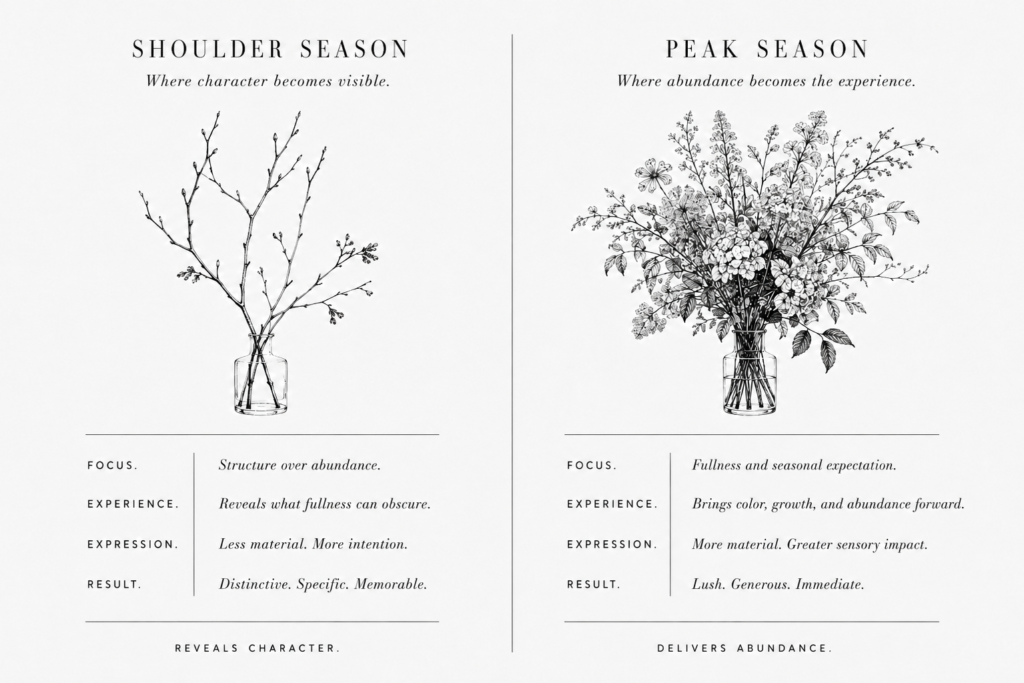
Peak season and shoulder season are not better and worse versions of the same thing.
They ask different things of the work.
Peak season often arrives with abundance and expectation. There is more material, more color, more growth, and more of what the client already associates with the season.
Shoulder season can reveal something else.
Structure becomes easier to see. Restraint carries more weight. A stem, a branching habit, a fading flower, or the architecture of a garden has room to become the point rather than the background.
For some practices, that is where character becomes clearest.
Shoulder season — where character leads.
The opportunity is not to manufacture demand for a quieter season.
It is to recognize when that season reveals something important about the work—and make sure the right client can see it too.
Language should make the work easier to recognize
Language is not an ornament.
Its job is to help the right client understand what she is looking at, why it matters, and whether it is for her.
Say what is specific.
“Custom” and “bespoke” may be accurate, but they tell the client very little about what makes one practice different from another.
The stronger language is usually already inside the work: the season, the setting, the restraint, the materials, the experience, or the particular result the right client values.
Name the difference, not every possibility.
A practice does not become stronger by explaining everything it can do.
Clarity often comes from deciding what deserves to lead.
The client should be able to understand what matters here without having to interpret the entire portfolio first.
Write for the client you want.
Broad language makes more people feel included.
That is not always useful.
Precise language allows the right person to recognize that the work was made with someone like her in mind.
The aim is not a narrower practice. It is a clearer invitation.
From Observation to Direction
The work begins with something specific.
What I see.
Not a generic compliment. Not what could be said about twenty other practices.
Something particular about the work, the season, the way the practice presents itself, or the way the client encounters it.
The gap.
Where is that strength failing to translate?
The work may get attention without producing the right bookings.
A portfolio can communicate quality while leaving the prospective client to interpret the value for herself. Or the strongest seasonal opportunity may already be present but unnamed.
The gap should be precise enough to recognize.
The direction.
Once the gap is clear, the next question becomes simpler:
What deserves to change?
The answer may be what the practice puts forward next season.
In another case, the language surrounding the work needs to change.
Or the opportunity may lie in when the client first encounters the idea.
And sometimes the right decision is to leave something alone.
Direction is useful when it makes the next choice clearer—not when it creates more things to do.
See the Thinking Applied
Seasonal Direction and Positioning Direction are not templates.
Each begins with the practice in front of me and follows the same discipline: look closely, identify the gap, and work through the direction that follows.
Two illustrative examples show how I look at a practice, identify what matters, and develop direction.
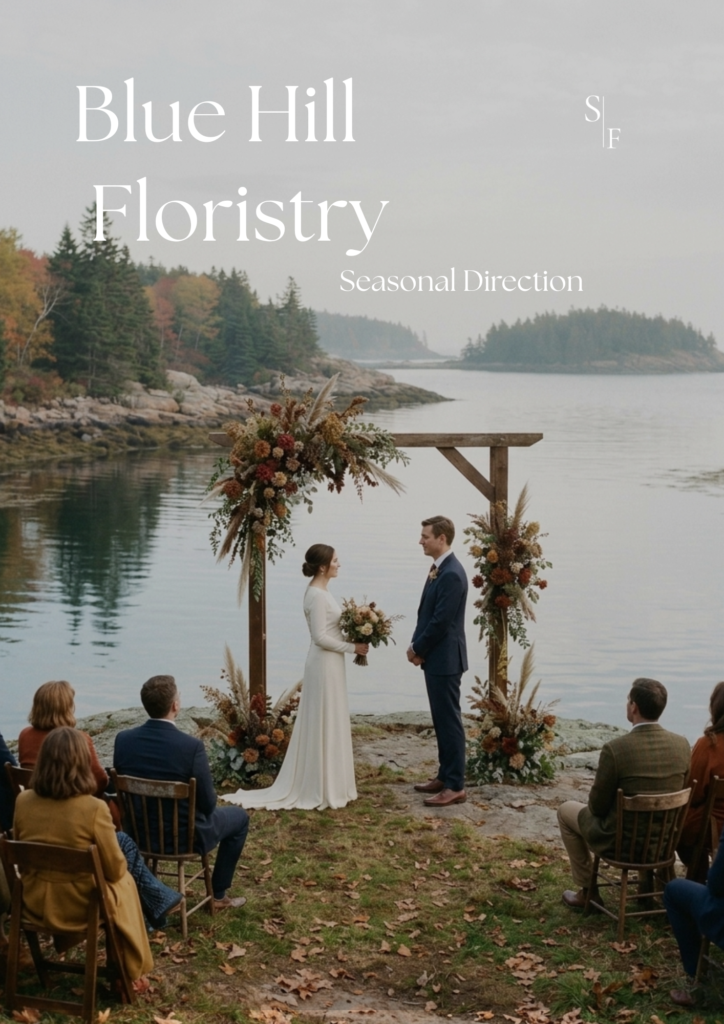
Blue Hill Floristry
Seasonal Direction – illustrative example
A shoulder-season floral practice with a strong hand and a clear sense of place.
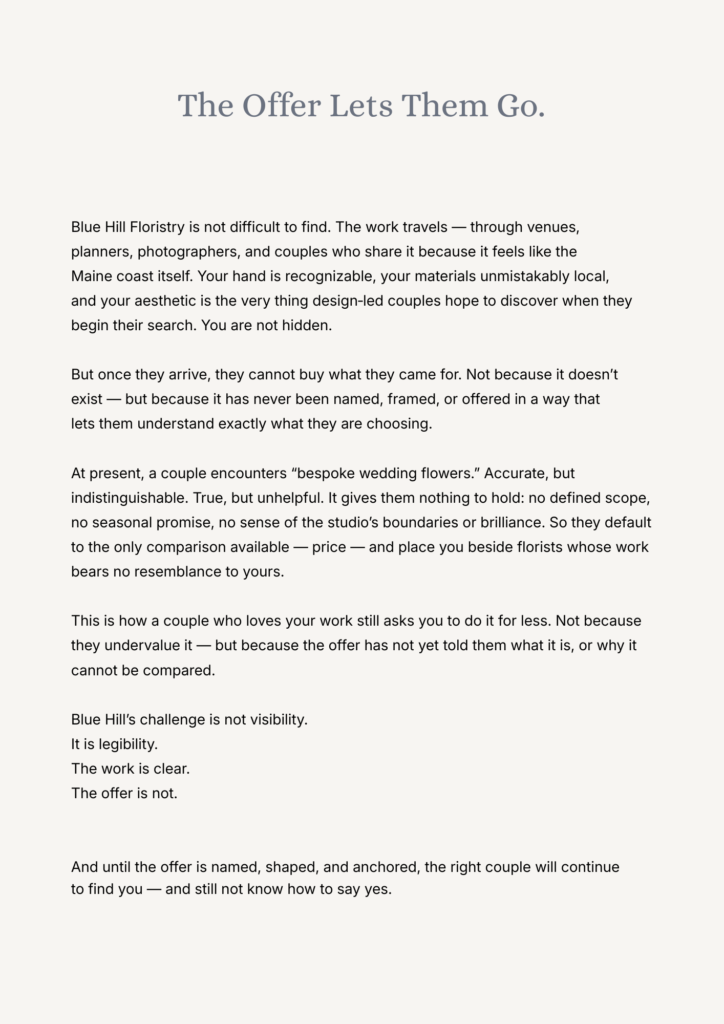
The work was already distinctive. The seasonal opportunity was less clear.
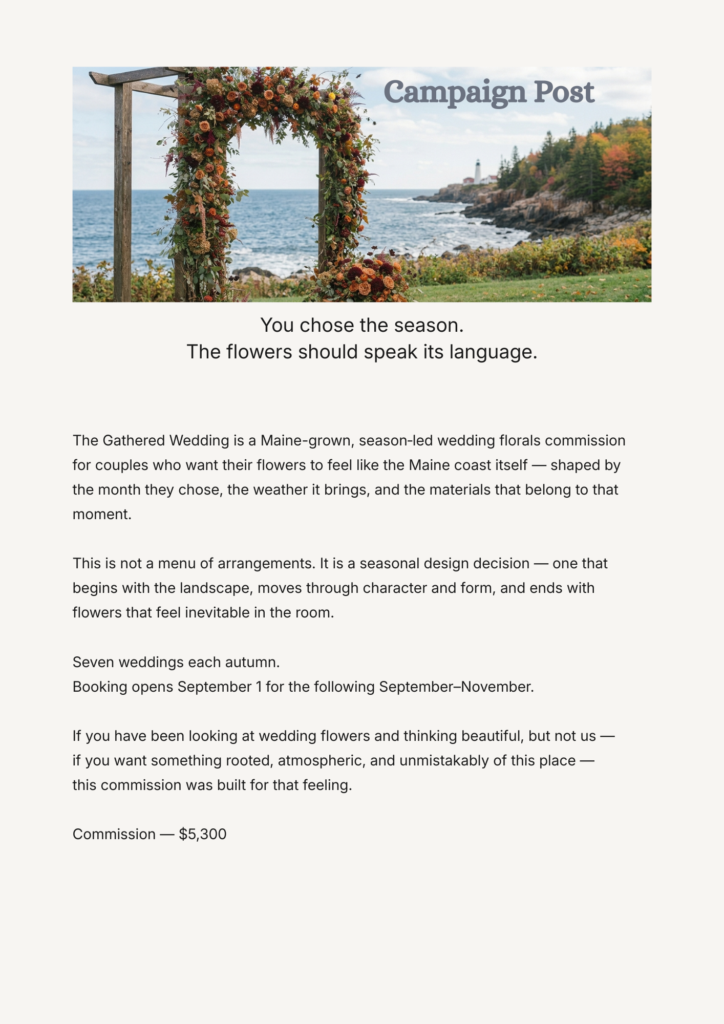
This direction examines what belongs to the season, who is most likely to value it, and what needs to become recognizable before that client chooses.
View the full Seasonal Direction example→
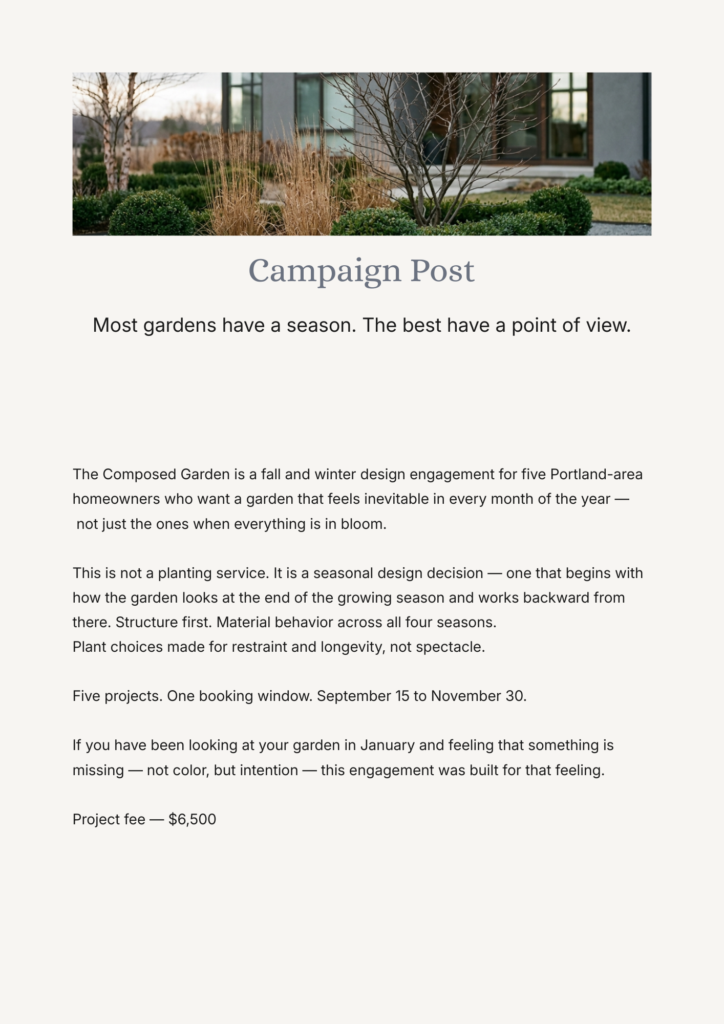
Sutton Garden Studio
Positioning Direction – illustrative example
A residential garden practice whose strongest point of view becomes particularly visible outside peak season.
The work did not need embellishment. It needed a clearer way for prospective clients to understand what they were seeing before the first conversation.
This direction examines how the practice can make that distinction easier to recognize.

View the full Positioning Direction example →
Good direction begins with looking closely.
The answer is rarely more marketing.
It is usually a better understanding of what the work is already saying, what the right client needs to recognize, and what matters now.
That is the thinking behind Seasonal Form.